Summary
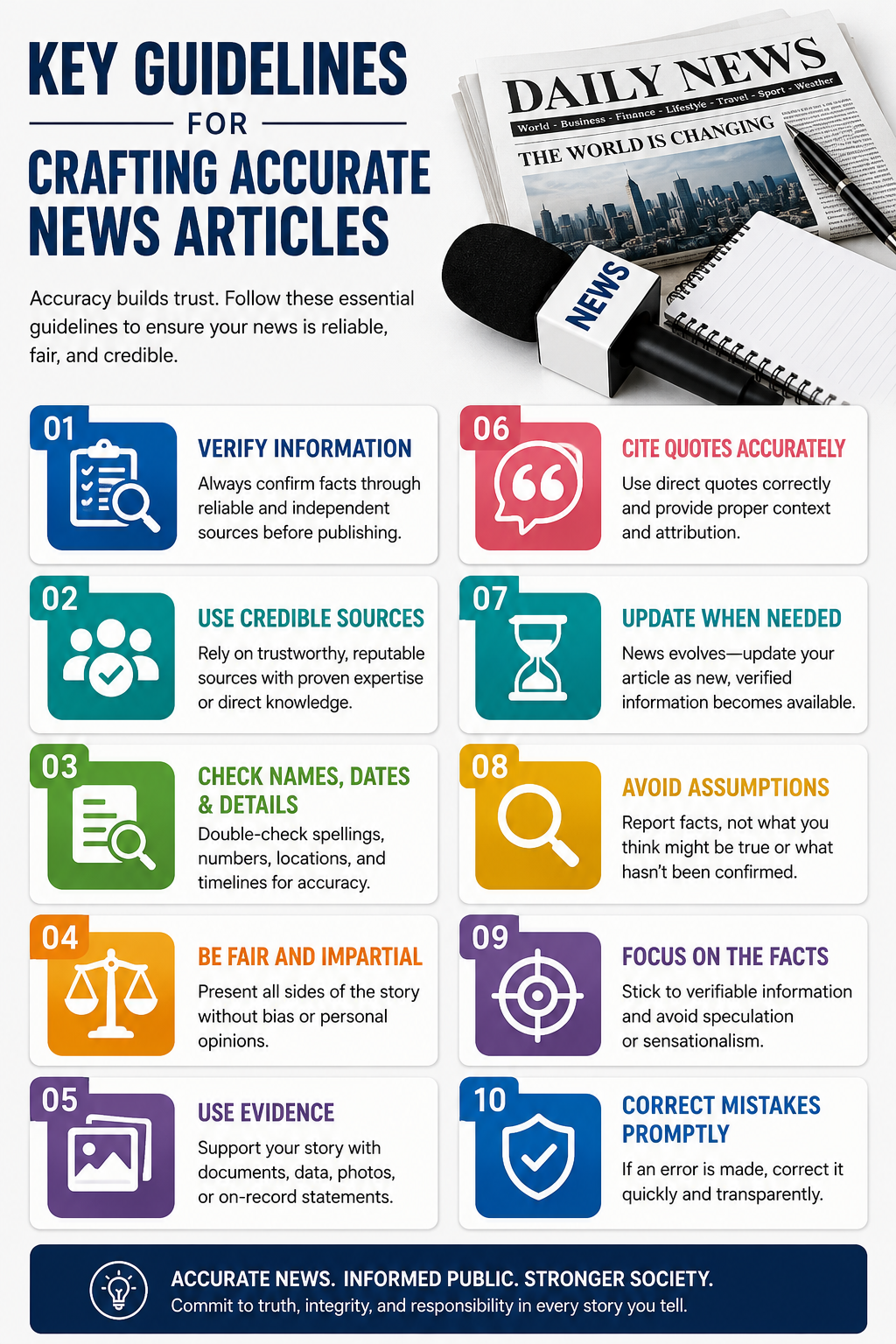
Professional news writing demands factual accuracy, neutral tone, and clear distinction between verified information and analysis. This article outlines essential practices for journalists and editors.
Main Story
Effective news reporting rests on three pillars:
- Verification: All facts, quotes, and statistics must be corroborated by reliable sources before publication.
- Neutrality: Use a professional, unbiased tone; avoid sensationalism and inflammatory language.
- Transparency: Clearly label opinions, analysis, and unverified information.
Background
Traditional journalistic standards have evolved with digital media, but core ethics remain unchanged. Trusted outlets continue to rely on:
- Multiple independent sources for key claims.
- Attribution of information to identifiable entities (e.g., agencies, experts, official statements).
- Rigorous fact‑checking workflows before stories go live.
Impact
Adhering to these guidelines builds audience trust, reduces the spread of misinformation, and upholds the credibility of news organizations. When journalists consistently apply these practices, they:
- Enhance public understanding of complex issues.
- Support democratic processes by providing reliable information.
- Mitigate legal risks associated with libel or false reporting.
What's Next
Newsrooms are increasingly integrating AI‑assisted tools for preliminary fact‑checking, yet human editorial judgment remains essential. Ongoing training programs and updated style guides will help journalists adapt to evolving media landscapes while preserving core standards.