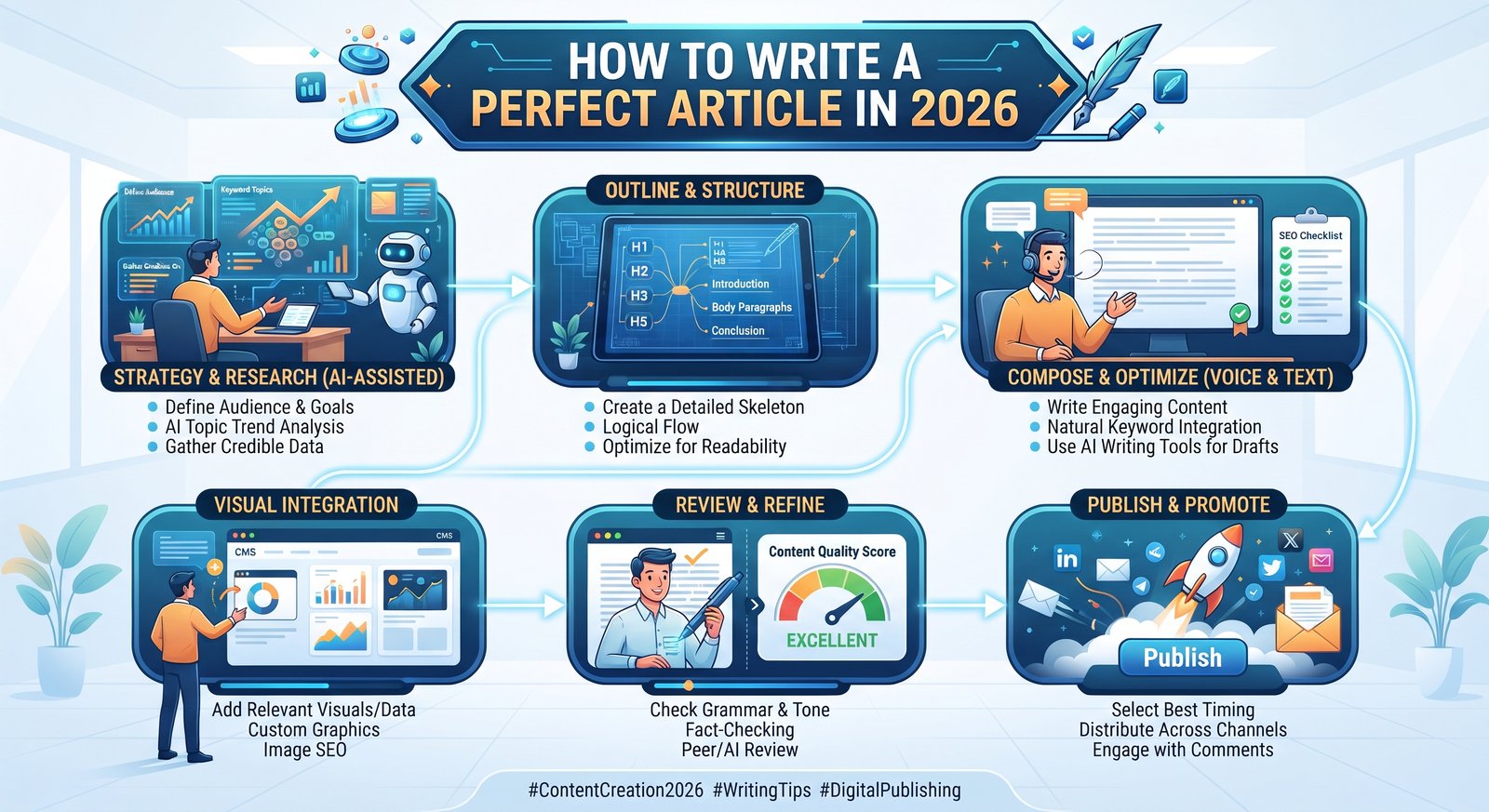
how to article writing can be daunting, especially when you're unsure where to start or how to structure your thoughts effectively. By following this guide, you'll learn the essentials of crafting a perfect article, from understanding the basics to mastering specific techniques and overcoming common obstacles. The article covers Basics of Article Writing, Structuring Your Article, Writing Techniques and Tips, Examples and Templates, and Common Challenges and Solutions.
Basics of Article Writing
Understand the Purpose of Your Article
When you start writing an article, the first step is to define its purpose. Is your article meant to inform readers about a topic, persuade them to take a specific action, or simply entertain them? Knowing your purpose will guide your writing process and help you tailor your content to meet your goals. For example, if you are writing to inform, you need to ensure your article is comprehensive and clear. If your goal is to persuade, you should focus on building a strong argument supported by evidence.
Research Your Topic Thoroughly
Accurate and in-depth research is crucial for writing a credible and engaging article. Spend time exploring your topic from multiple angles to gather a wide range of information. Utilize reliable sources such as academic journals, credible websites, and expert interviews. Keep track of your sources and cite them appropriately to maintain the integrity of your article.
Steps to Effective Research
- Identify Key Sources: Use libraries, databases, and reputable online platforms to find authoritative information.
- Take Notes: Record important points and relevant data to organize your information.
- Evaluate Sources: Ensure the credibility of your sources to avoid misinformation.
Crafting a strong thesis statement is vital as it sets the direction for your article. A thesis statement should clearly state the main argument or point you aim to make. For instance, if your article is about the benefits of remote work, your thesis might be: "Remote work enhances productivity and job satisfaction by providing flexibility and a better work-life balance."
Thesis Statement Example
- Topic: Benefits of Remote Work
- Thesis Statement: Remote work enhances productivity and job satisfaction by providing flexibility and a better work-life balance.
Structuring Your Article
Organize Your Article with an Introduction, Body, and Conclusion
To write a structured article, begin with a clear and concise introduction. This section should hook your readers and provide a brief overview of what your article will cover. For example, if your article is about how to article writing, you might start with a sentence like, "Mastering the art of writing a compelling article requires a strategic plan and a clear structure."
Use Subheadings to Break Up Text and Make Your Article More Readable
Subheadings are essential for guiding your readers through your article. They break up large blocks of text, making your article more digestible and easier to scan. Use subheadings to introduce each main point and ensure they are specific and informative. For instance, if your article is about structuring an article, you might use subheadings like "Introduction," "Body," and "Conclusion."
Ensure Each Paragraph Has a Clear Topic Sentence and Supporting Details
Each paragraph in your article should have a single focus. Start with a topic sentence that clearly states the main point, followed by supporting details and examples. This structure helps maintain the flow and coherence of your article. Here’s an example:
- Topic Sentence: The introduction sets the tone for the entire article.
- Supporting Details: It should include a thesis statement, background information, and a brief outline of the main points you will cover.
Example Structure for a "How to Article Writing" Guide
To illustrate, consider this simplified structure for a "How to Article Writing" guide:
- Introduction
- Brief overview
- Importance of a structured approach
- Introduction to Article Writing
- Definition and purpose
- Key elements of a good article
- Organizing Your Article
- Introduction, body, conclusion
- Use of subheadings
- Writing Techniques and Tips
- Crafting a strong thesis statement
- Structuring the body
- Writing a compelling conclusion
- Examples and Templates
-
Writing Techniques and Tips

Use Active Voice for Engagement
Using active voice makes your writing more direct and engaging. Instead of saying "The report was read by John," say "John read the report." This makes the sentence more immediate and interesting. Active voice can help maintain a faster pace and keep the reader involved.
Vary Sentence Length and Structure
Varying sentence length and structure is essential to maintain the reader's interest. Short sentences can be impactful for emphasizing points, while longer sentences can provide detailed explanations. Experiment with different sentence structures, such as questions, statements, and lists, to keep the text dynamic and engaging.
Edit and Proofread Multiple Times
Editing and proofreading are crucial for improving clarity and eliminating errors. Start by reviewing the article for content and structure, then move on to grammar and style. Here’s a quick checklist:
- Step 1: Read the article out loud to find awkward phrasing.
- Step 2: Check for grammar and spelling errors.
- Step 3: Ensure the article flows logically and is easy to follow.
- Step 4: Get feedback from others to catch any missed errors or unclear parts.
Examples of Effective Techniques
- Active Voice: "She wrote the article" vs. "The article was written by her."
- Varying Sentence Length: "The sun was setting. It cast a warm glow over the city. The birds flew south, signaling the start of autumn."
- Editing Example:
- Original: "The article was written by John, and it was edited by Sarah, and now it is ready to be published."
- Revised: "John wrote the article, and Sarah edited it. The article is now ready to be published."
By applying these techniques, you can enhance the quality and readability of your articles, making "how to article writing" both more effective and enjoyable.
Examples and Templates
Refer to Well-Written Articles for Inspiration and Structure
Refer to well-written articles in your field for inspiration and structure. Reading articles that are highly ranked and well-received can provide insights into effective writing techniques and content structures. Pay attention to how the articles are organized, the clarity of the language, and the relevance of the content to your audience.
Utilize Templates Provided by Publishers or Online Resources
Step 1: Identify the Right Template
- Publisher-Specific Templates: Many publishers offer templates that are tailored to their style and audience. These templates can help you align your article with the publication's guidelines.
- Online Resources: Websites like Medium, Harvard Business Review, and ProBlogger offer free templates and guides that you can use to structure your articles.
Step 2: Customize the Template
- Adapt the Structure: Adjust the template to fit your specific topic and audience. Ensure that the structure supports the logical flow of your content.
- Customize the Language: Modify the template language to make it more engaging and relevant. Tailor the tone and style to match your voice.
Step 3: Fill in the Content
- Use the Template as a Guide: Fill in the template with your content, ensuring that each section is well-developed and informative. Use bullet points or numbered steps to break down complex information.
Examples of Effective Article Structures
| Section | Content Example |
|---|---|
| Introduction | "How to article writing requires a clear introduction that grabs the reader's attention and sets the stage for the rest of the article." |
| Body | "In this section, you can break down the steps or concepts into digestible parts. For instance, if you're writing about how to start a business, you could have steps like 'Choose a Business Name,' 'Register Your Business,' and 'Secure Funding.'" |
| Conclusion | "To conclude, summarize the key points and provide a call to action, encouraging the reader to
Common Challenges and Solutions
When tackling the daunting task of "how to article writing," you might face several common challenges. Overcoming writer's block and managing your time effectively can significantly impact the quality and quantity of your articles. Here’s how to address these issues.
Overcoming Writer's Block
Writer's block can strike at any time, making it hard to start or continue writing. To combat this, establish a writing routine and brainstorm ideas regularly.
- Set a Writing Routine: Dedicate specific times to write each day. Consistency can help build a habit and reduce the anxiety of starting.
- Brainstorm Ideas: Keep a notebook or digital document to jot down ideas as they come. This can be done daily or weekly, even if you don’t sit down to write.
Managing Time Effectively
Effective time management is crucial for completing your articles on schedule. Setting specific goals and deadlines can help you stay on track.
- Set Specific Goals: Define what you want to achieve each day or week. Break down the larger task into smaller, manageable parts.
- Establish Deadlines: Give yourself realistic deadlines for each part of the writing process, including research, drafting, and editing.
Example Timeline
Here’s a simple timeline for a week of article writing:
| Day | Task | Timeframe |
|---|---|---|
| 1 | Research | 2 hours |
| 2 | Drafting | 3 hours |
| 3 | Editing | 2 hours |
| 4 | Revisions | 2 hours |
| 5 | Final Review | 1 hour |
By setting up a structured routine and managing your time effectively, you can overcome common challenges and improve your article writing skills.
Final thoughts
By following the steps outlined in this guide, you can craft a compelling and well-structured article that engages your audience and effectively communicates your message. Your next step is to apply these techniques to write your first draft. What topic will you choose to write about? Share your choice in the comments below!
Related posts : Top 7 Free AI Writing Tools for Bloggers in 2026
Free tools to put this into practice