What are the cheapest personal loans? When considering a personal loan, many people wonder how to find the most affordable options. This article will guide you through understanding personal loans, identifying factors that affect interest rates, and comparing various loans to find the best deals. We will also provide tips on how to secure the cheapest personal loans available and offer real-world examples to illustrate these points.
Understanding personal loans
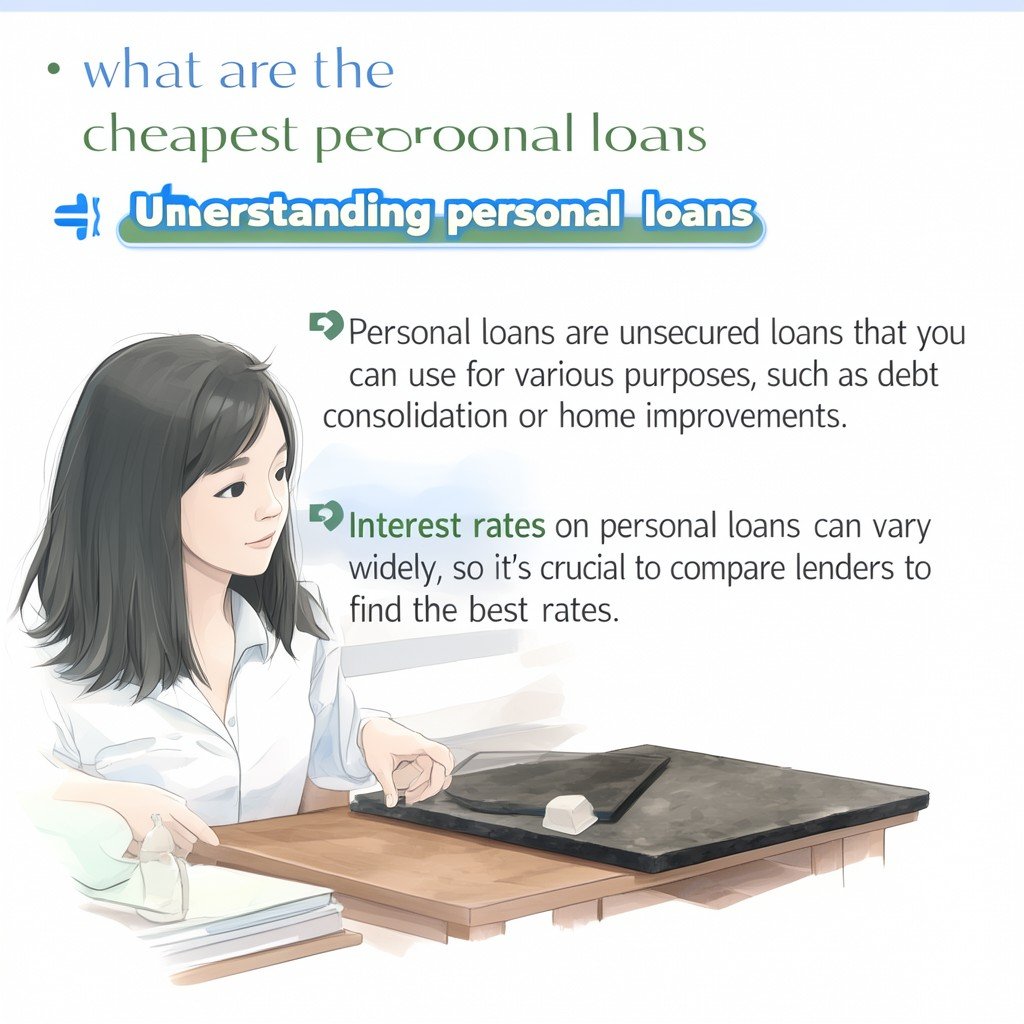
Personal loans are unsecured loans that you can use for various purposes, such as debt consolidation, home improvements, or paying for unexpected expenses. These loans typically offer a fixed amount of money, which you agree to repay over a set period, usually ranging from one to seven years. ### What Are the Cheapest Personal Loans?
Interest rates on personal loans can vary widely, with rates ranging from around 6% to over 30%, depending on your credit score, the lender, and other factors. ### Factors Affecting Interest Rates
Several factors can influence the interest rate on a personal loan, including:
- Credit Score: A higher credit score can lead to lower interest rates.
- Loan Amount: Larger loan amounts might have lower interest rates due to economies of scale.
- Loan Term: Shorter loan terms often come with higher interest rates.
- Lender and Bank Policies: Different lenders have different policies and practices, which can significantly impact the interest rates offered.
How to Compare Personal Loans
To find the cheapest personal loans, follow these steps:
- Check Multiple Lenders: Compare rates from several lenders, including banks, credit unions, and online lenders.
- Use Loan Comparison Tools: Online tools can help you compare rates and terms from different lenders.
- Read Fine Print: Look for hidden fees, such as origination fees or prepayment penalties.
- Understand the Terms: Make sure you fully understand the repayment schedule, interest rates, and any other conditions.
By carefully comparing these elements, you can identify the cheapest personal loans available.
Factors affecting personal loan rates
Credit Score
Your credit score is a key factor in determining the interest rate you'll be offered. A higher credit score generally means a lower interest rate, making the loan cheaper. Lenders view individuals with higher credit scores as lower risk, which justifies offering them better terms.
Loan Term
The loan term also plays a significant role in determining the cost of your personal loan. Longer loan terms can reduce your monthly payments but often result in higher total interest paid over the life of the loan. For instance, a 36-month loan might have lower monthly payments compared to a 12-month loan, but the total interest paid will likely be more.
Loan Amount
Interestingly, the loan amount can sometimes influence the interest rate. Larger loan amounts may result in lower interest rates, as the loan appears less risky to lenders. This is because the total amount at stake is higher, potentially reducing the relative risk for the lender.
Summary
By carefully comparing these elements, you can identify the cheapest personal loans available. Understanding how your credit score, loan term, and loan amount affect the rates will help you make informed decisions and potentially secure a more affordable loan.
How to compare personal loans
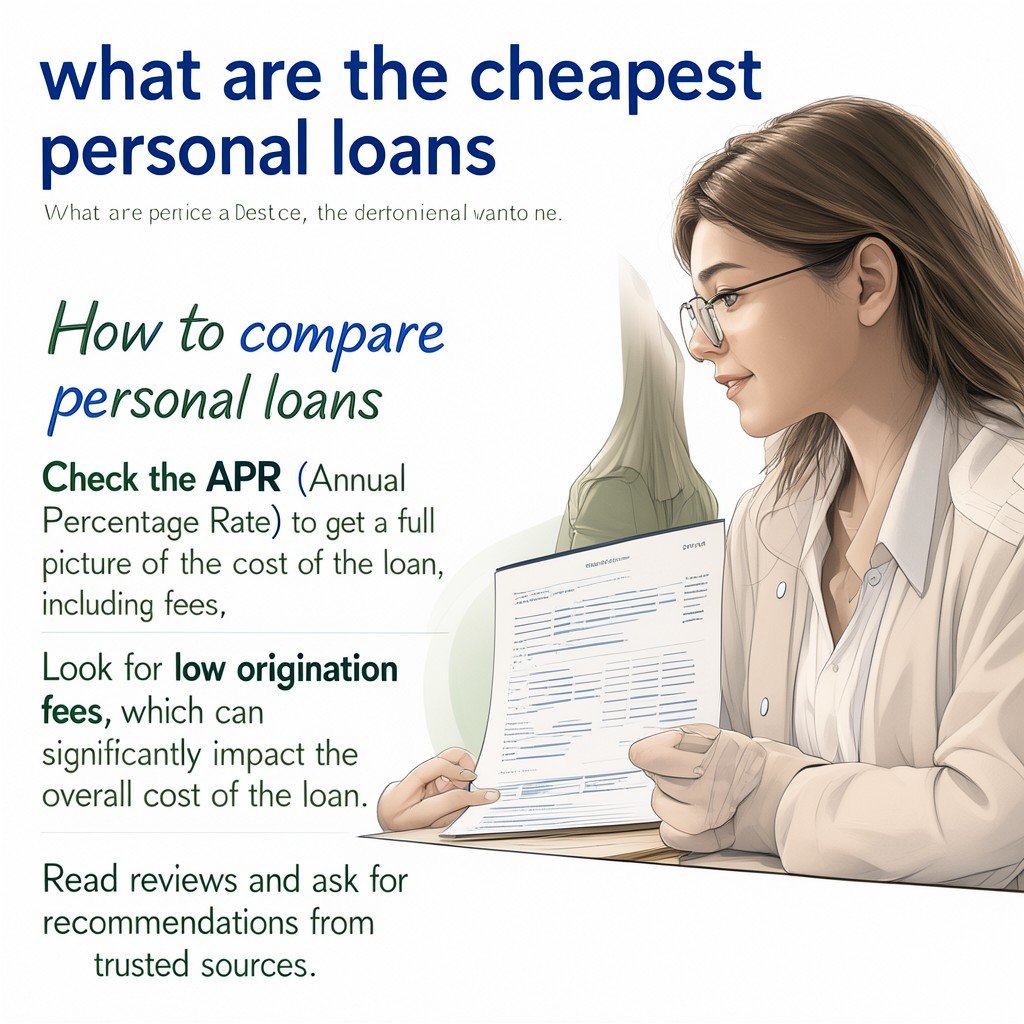
To compare personal loans effectively, focus on several key factors that can help you identify the cheapest personal loans available.
Check the APR (Annual Percentage Rate)
The APR provides a comprehensive view of the total cost of the loan, including both the interest rate and any additional fees. A lower APR means a lower overall cost of borrowing.
Look for Low Origination Fees
Origination fees are charges for processing your loan application. These fees can significantly increase the total cost of the loan. Aim for loans with minimal or no origination fees.
Read Reviews and Ask for Recommendations
Research reviews from current and past borrowers to understand their experiences with different lenders. Additionally, ask for recommendations from trusted sources, such as financial advisors or friends who have taken out personal loans.
Steps to Compare Personal Loans
- Gather Information: Collect details from at least three different lenders, including APR, origination fees, and other costs.
- Review Fees: Compare the origination fees and any other associated costs to understand the total cost of each loan.
- Check APRs: Compare the APRs to determine which loan offers the lowest overall cost.
- Read Reviews: Look for user reviews and feedback to gauge the reliability and service quality of each lender.
Example Comparison Table
| Lender | APR | Origination Fee | Total Cost for $10,000 Loan |
|---|---|---|---|
| Lender A | 8.5% | 2% | $10,850 |
| Lender B | 7.5% | 1% | $10,750 |
| Lender C | 9.0% | 1.5% | $10,900 |
By following these steps and tips, you can effectively compare personal loans and find the cheapest options available.
Tips for getting the cheapest personal loans
Shop Around and Compare Offers
Shopping around is a crucial step in finding the cheapest personal loans. Don't limit yourself to a single lender; instead, compare offers from multiple financial institutions. This approach helps you identify the best rates and terms, ensuring you secure the most favorable deal.
Consider a Co-signer
If you're struggling to qualify for a personal loan due to a poor credit score, consider adding a co-signer to your application. A co-signer with a better credit history can significantly lower your interest rate and improve your loan terms. However, keep in mind that if you default on the loan, the co-signer will be responsible for repayment.
Pay Off the Loan Quickly
Paying off your personal loan as quickly as possible can save you a considerable amount in interest. While this might mean higher monthly payments, it’s worth considering if you can afford it. If you can manage the increased payments, you'll pay less interest over the life of the loan, making it cheaper overall.
Tips Summary
- Shop Around and Compare Offers: Research and compare loans from various lenders to find the best rates and terms.
- Consider a Co-signer: If your credit score is low, a co-signer can help secure better loan terms and a lower interest rate.
- Pay Off the Loan Quickly: Reducing the loan term can save you money on interest, even if it means higher monthly payments.
By following these steps and tips, you can effectively compare personal loans and find the cheapest options available.
Real-world examples of cheap personal loans
Some banks and credit unions offer personal loans with APRs as low as 5%. For instance, a local credit union might provide a loan with an APR of 5%, whereas a major bank might offer a similar rate but with additional fees.
Online lenders often provide competitive rates, sometimes as low as 3%. Companies like LendUp and SoFi are known for offering lower interest rates, especially for borrowers with good credit histories. Government-backed loans, such as those from the U.S. Department of Agriculture (USDA), may offer fixed rates, which can be more predictable and lower than those from private lenders.
How to Identify Cheapest Personal Loans
- Check with Credit Unions: Credit unions often offer lower rates and better terms due to their not-for-profit nature.
- Look for Online Lenders: Research various online lenders to find the lowest rates. Websites like LendingTree and NerdWallet can help compare rates from multiple lenders.
- Government-Backed Loans: Explore options from government agencies to see if they offer lower fixed rates.
- Use APR Comparisons: Compare the APRs of different loans to find the most affordable option.
Example Scenarios
- Credit Union Loan: A member of a credit union might qualify for a personal loan with an APR of 4.5%.
- Online Lender Loan: An individual with a strong credit score could secure a personal loan from an online lender with an APR of 3%.
- Government-Backed Loan: A USDA loan might offer a fixed APR of 4%, making it more predictable and potentially cheaper than variable-rate loans.
By comparing these options, you can find the cheapest personal loans available for your specific needs.
Frequently asked questions
How to get cheap personal loans
Research lenders, check your credit score, and apply during a promotional period to secure lower rates and fees.
How to compare personal loans
Compare interest rates, fees, loan terms, and customer reviews from multiple lenders to find the best deal.
What are the best personal loans available
The best personal loans are those with the lowest interest rates, no hidden fees, and flexible repayment options, but specifics vary by lender and market conditions.
What is the cheapest personal loan interest rate
Interest rates can vary widely, but as of 2026, rates can start from around 5% to 10%, depending on your credit score and lender.
Final thoughts
In summary, the key to finding the cheapest personal loans in 2026 is to compare multiple lenders, check for hidden fees, and ensure you understand the terms and conditions. Start by gathering quotes from at least three lenders and review the APR, repayment period, and any additional charges. This thorough approach will help you secure the most cost-effective loan. What methods did you use to compare loan offers?
Related posts : 2026's Best Personal-Finance-App for Budgeting · Top 10 Personal-Finance-Books for Beginners 2026 · Top 10 Personal-Finance-Apps for Your Budget in 2026
Free tools to put this into practice