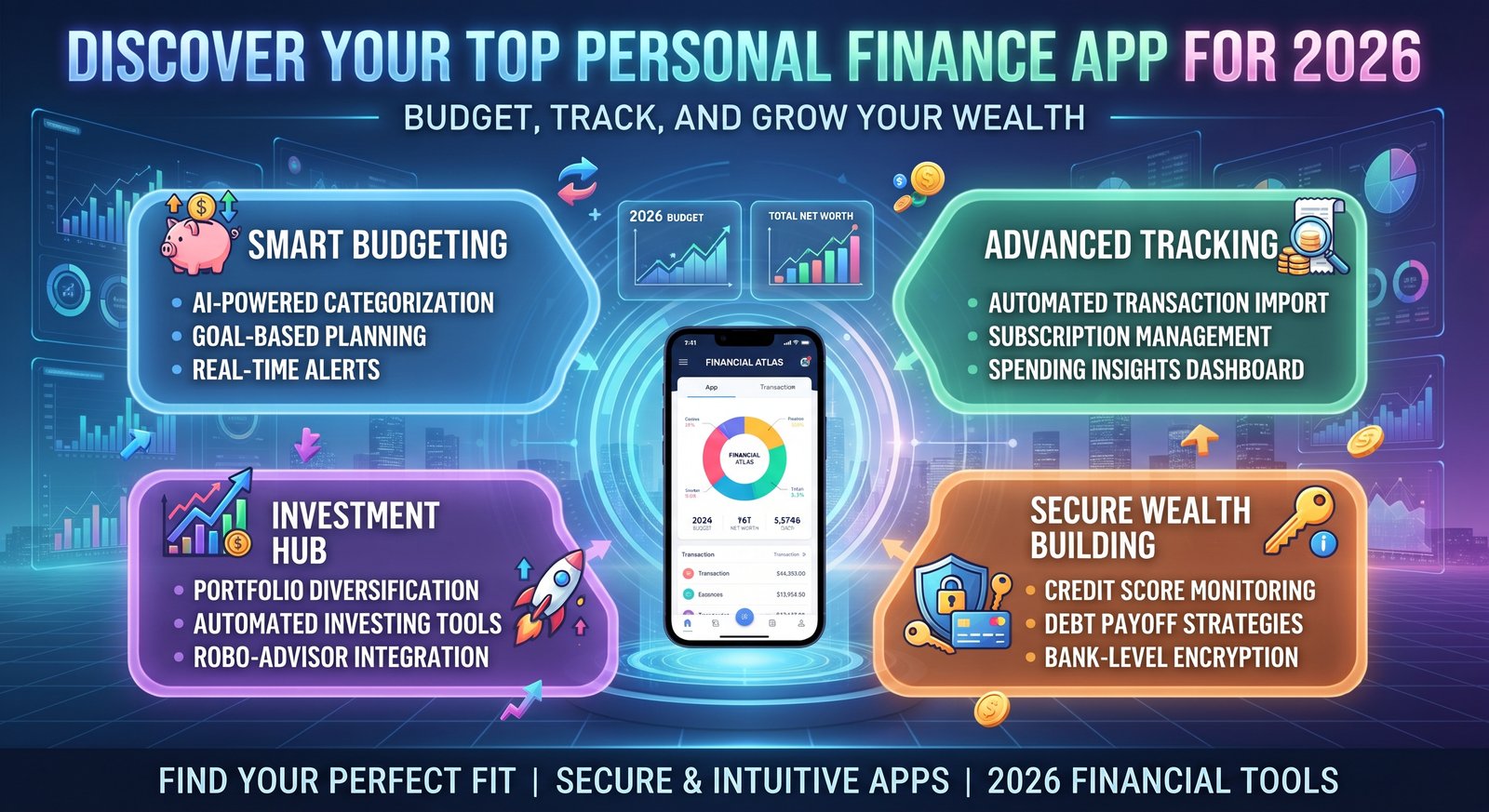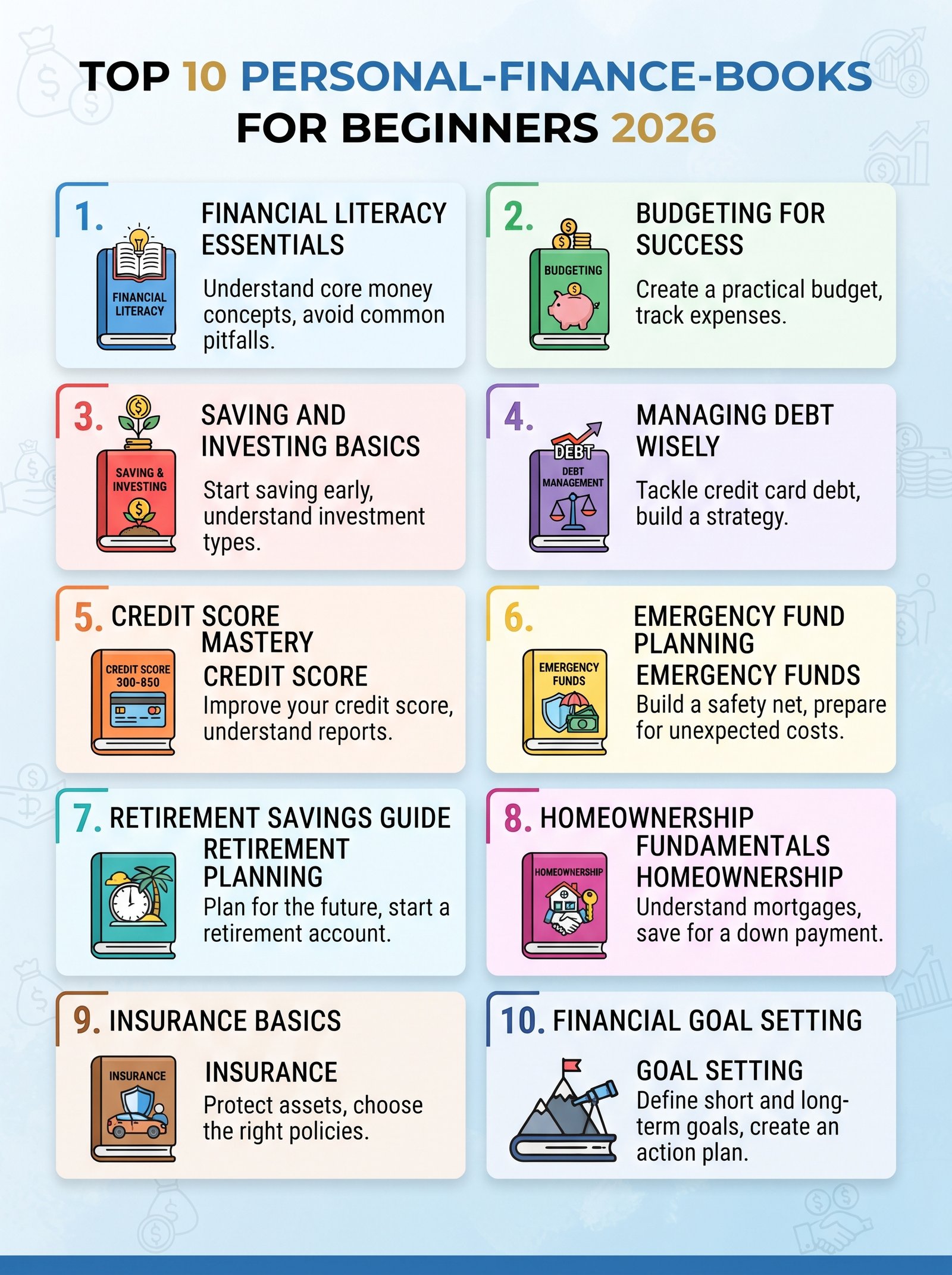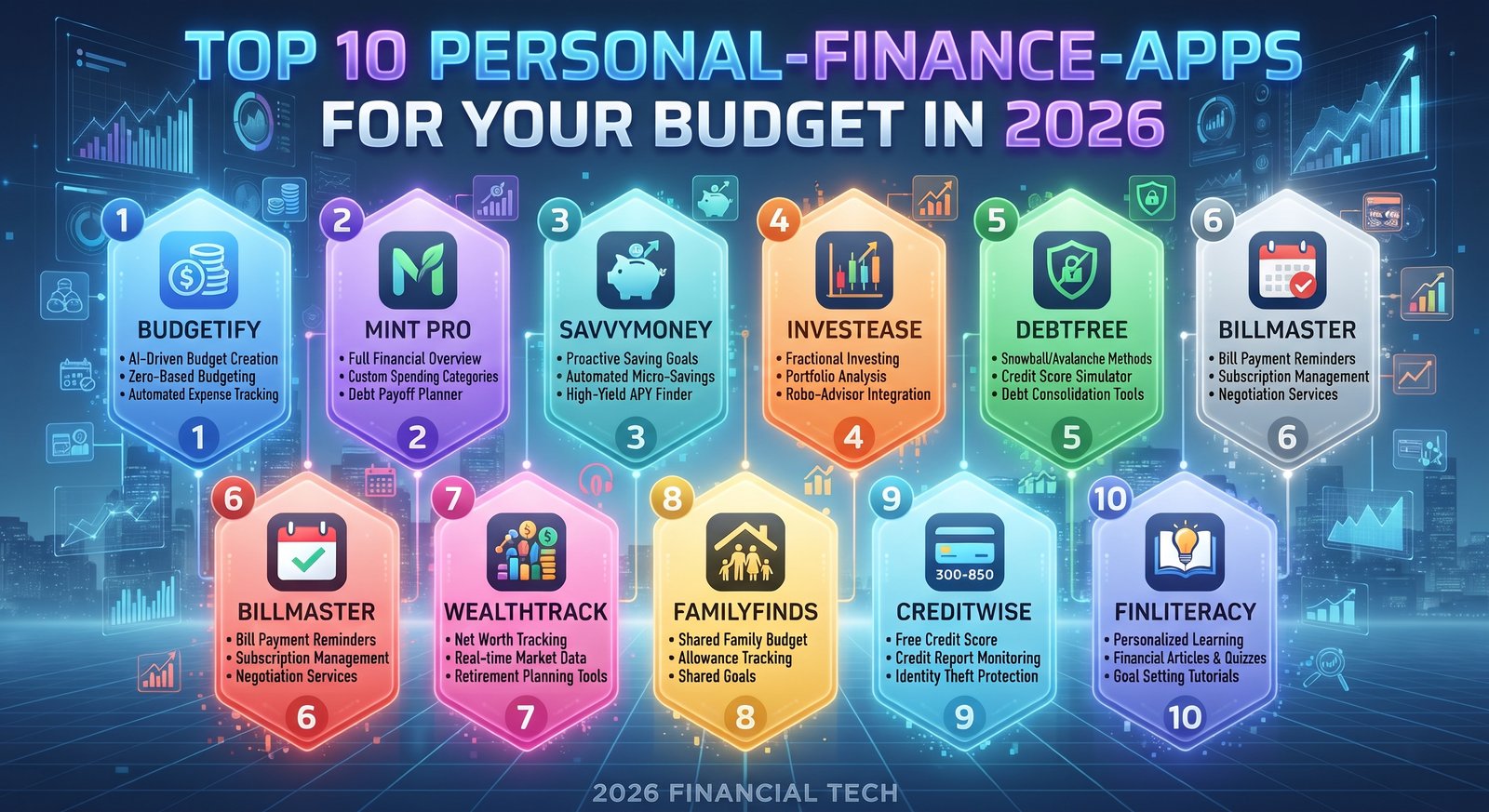
Personal finance apps have become indispensable tools for managing money effectively, helping you keep track of expenses, plan for the future, and make informed financial decisions. This article guides you through the top 10 personal finance apps for 2026, providing insights into what these apps offer, the number of options available, and tips for selecting the best one for your needs. We’ll also explore real-world examples of how these apps can transform your financial management.
What Are Personal Finance Apps?
Personal finance apps are digital tools designed to help you manage your money, budget, and investments. These apps offer a wide range of features, making financial management more accessible and user-friendly. They allow you to track your expenses, create and monitor budgets, receive reminders for upcoming bills, and even manage your investments.
Features Overview
- Expense Tracking: These apps help you categorize and track your spending, giving you a clear view of where your money goes.
- Budgeting: You can set up and monitor your spending limits, ensuring you stay on track with your financial goals.
- Bill Payment Reminders: They notify you when bills are due, helping you avoid late fees and maintaining a good credit score.
- Investment Management: Some apps offer tools for tracking and managing your investments, including stocks, bonds, and other assets.
A Closer Look
- Expense Tracking: Apps like Mint and Personal Capital allow you to link your bank accounts and credit cards, automatically categorizing your transactions.
- Budgeting: Tools such as You Need a Budget (YNAB) enable you to set up detailed budgets based on your income and expenses.
- Bill Payment Reminders: Apps like Acorns offer reminders and even automate bill payments.
- Investment Management: Robinhood and Stash provide platforms for buying and tracking stocks, ETFs, and other investments.
How Many Personal Finance Apps Are There?
As of 2026, the market for personal finance apps is expansive, with numerous options catering to various needs and preferences. Major players like Mint and YNAB compete alongside newer entrants like Acorns and Robinhood. The diversity in features and user interfaces ensures there is an app to suit almost any budgeting and investment management need.
Best Personal Finance Apps for 2026
Mint: Comprehensive Budgeting for All
Mint stands out as a top personal finance app, offering robust budgeting tools and the ability to connect multiple financial accounts. Its user-friendly interface makes it easy to track spending, view balances, and set up alerts for bill payments. Mint also provides detailed categorization of transactions, helping users understand where their money goes. ### Acorns: Simple Investment for Beginners
For newcomers to investing, Acorns is an excellent choice. The app rounds up your daily purchases and invests the spare change into a diversified portfolio. This feature makes saving and investing accessible, even for small amounts. Additionally, Acorns offers educational resources to help users understand the basics of investing. ### Personal Capital: For Detailed Financial Tracking
Personal Capital is perfect for those who want to keep a close eye on their net worth and investments. This app provides comprehensive tools for tracking investments, retirement accounts, and overall financial health. Its advanced features include asset allocation analysis and portfolio management tools, making it a valuable resource for more experienced investors. ### EveryDollar: Following Dave Ramsey's Plan
Based on the principles of Dave Ramsey’s 7 Baby Steps, EveryDollar helps users plan their financial future with a structured approach. This app focuses on debt elimination, saving for the future, and building wealth. Its step-by-step guidance makes it ideal for those following Ramsey’s financial advice. ### Summary of Top Picks
- Mint: Comprehensive budgeting with multiple account integration.
- Acorns: Easy investment for beginners with spare change investing.
- Personal Capital: Detailed financial tracking for advanced users.
- EveryDollar: Structured financial planning based on Dave Ramsey’s principles.
How Many Personal Finance Apps Are There?
There are numerous personal finance apps available, ranging from basic budgeting tools to advanced investment platforms. These apps cater to a wide spectrum of financial needs, from tracking daily expenses to managing complex investments. Some popular ones include Mint, Acorns, Personal Capital, EveryDollar, and more.
Overview of Popular Apps
- Mint: Known for its comprehensive financial tracking, Mint offers a user-friendly interface that connects with your bank accounts to track spending and budget. It also provides credit score monitoring and financial advice.
- Acorns: This app turns your everyday spending into investments, rounding up your purchases and investing the difference. It’s great for users who want to start investing with very small amounts.
- Personal Capital: Ideal for those managing significant investments, Personal Capital offers robust tools for investment tracking, retirement planning, and tax optimization.
- EveryDollar: Structured financial planning based on Dave Ramsey’s principles.
Evaluating the Number of Apps
- Market Growth: The number of personal finance apps has grown exponentially over the past few years, driven by increased demand for financial transparency and management.
- Specialized Apps: In addition to general finance apps, there are specialized apps targeting specific financial needs, such as mortgage calculators, retirement planners, and student loan management tools.
- Continuous Updates: App developers frequently update their offerings, introducing new features and improving existing ones, which keeps the app landscape dynamic and expanding.
Conclusion
The diversity of personal finance apps available today reflects the varied financial needs of individuals and households. Whether you're looking for basic budgeting tools or advanced investment management, there's an app to suit your needs.
Tips for Choosing the Best Personal Finance App
When selecting a personal finance app, it's crucial to consider your financial goals and needs. Whether you're saving for a home, planning your retirement, or simply keeping an eye on daily expenses, the app should align with your objectives. For instance, if you're focused on reducing debt, look for apps that offer detailed spending breakdowns and automatic budgeting tools.
Features to Look For
- Real-Time Spending Tracking: Choose apps that provide instant updates on your transactions, allowing you to monitor your spending habits more closely.
- Investment Management: Opt for apps that integrate with investment platforms, offering tools for tracking your portfolio and managing your investments.
- Bill Payment Reminders: Find apps that send timely reminders for upcoming bills, helping you avoid late fees and maintaining good credit.
Security and Privacy
- Check Security Policies: Ensure the app has robust security measures in place, such as encryption and two-factor authentication, to protect your financial data.
- Privacy Policies: Review the app’s privacy policy to understand how your data is used and shared. Look for transparency and strong privacy protections.
By following these steps, you can select a personal finance app that not only meets your current needs but also helps you achieve your financial goals.
Real-World Examples of Personal Finance Apps
Mint: Free and Paid Features
Mint offers both a free version and premium features for a monthly fee. The free version allows you to track your expenses, monitor your credit score, and receive financial tips. For those looking to delve deeper, the premium version provides more advanced tools, including personalized budgeting, investment tracking, and tax assistance.
Acorns: Starting with $1
Acorns is known for its simplicity, requiring only a minimum investment of $1 to start. It’s particularly popular for its fractional investing feature, where users can invest in a diversified portfolio of ETFs with just a few dollars. This makes Acorns accessible for beginners and those with limited funds.
Personal Capital: Free and Investment Management
Personal Capital offers a free version that includes features like net worth tracking, investment performance analysis, and retirement planning tools. For those who require more comprehensive financial management, the platform offers premium features such as one-on-one financial planning and portfolio management. However, these premium services may come with a fee.
Table of Examples
| App | Features | Notes |
|---|---|---|
| Mint | Free basic features, premium for advanced | Suitable for all, budget tracking, credit score. |
| Acorns | Fractional investing, starting with $1 | Great for beginners, easy to use. |
| Personal Capital | Free for basic, premium for investment | Comprehensive tools, may charge for more services. |
By exploring these real-world examples, you can find the personal finance app that best fits your needs and financial goals.
Frequently asked questions
How many personal finance apps are there?
The exact number of personal finance apps can vary widely, but there are over 500 popular ones available in the app stores as of 2026.
What is the best finance app?
The best finance app varies based on individual needs, but many users highly recommend Mint for its comprehensive features and user-friendly interface.
What are personal finance apps?
Personal finance apps are digital tools designed to help users manage their money, track expenses, set budgets, and plan for the future.
What are some good personal finance apps?
Some good personal finance apps include Mint, Personal Capital, and YNAB (You Need A Budget), each offering unique features to help manage finances effectively.
Final thoughts
The top 10 personal-finance apps in 2026 offer robust features to help you manage your budget more effectively. Key apps like Mint and YNAB stand out for their comprehensive tools, while newer entries like Spendwell and BillGuard provide unique solutions for specific needs. To get started, choose an app that aligns with your financial goals and begin tracking your expenses today. How has switching to a new app impacted your budget management?
Free tools to put this into practice