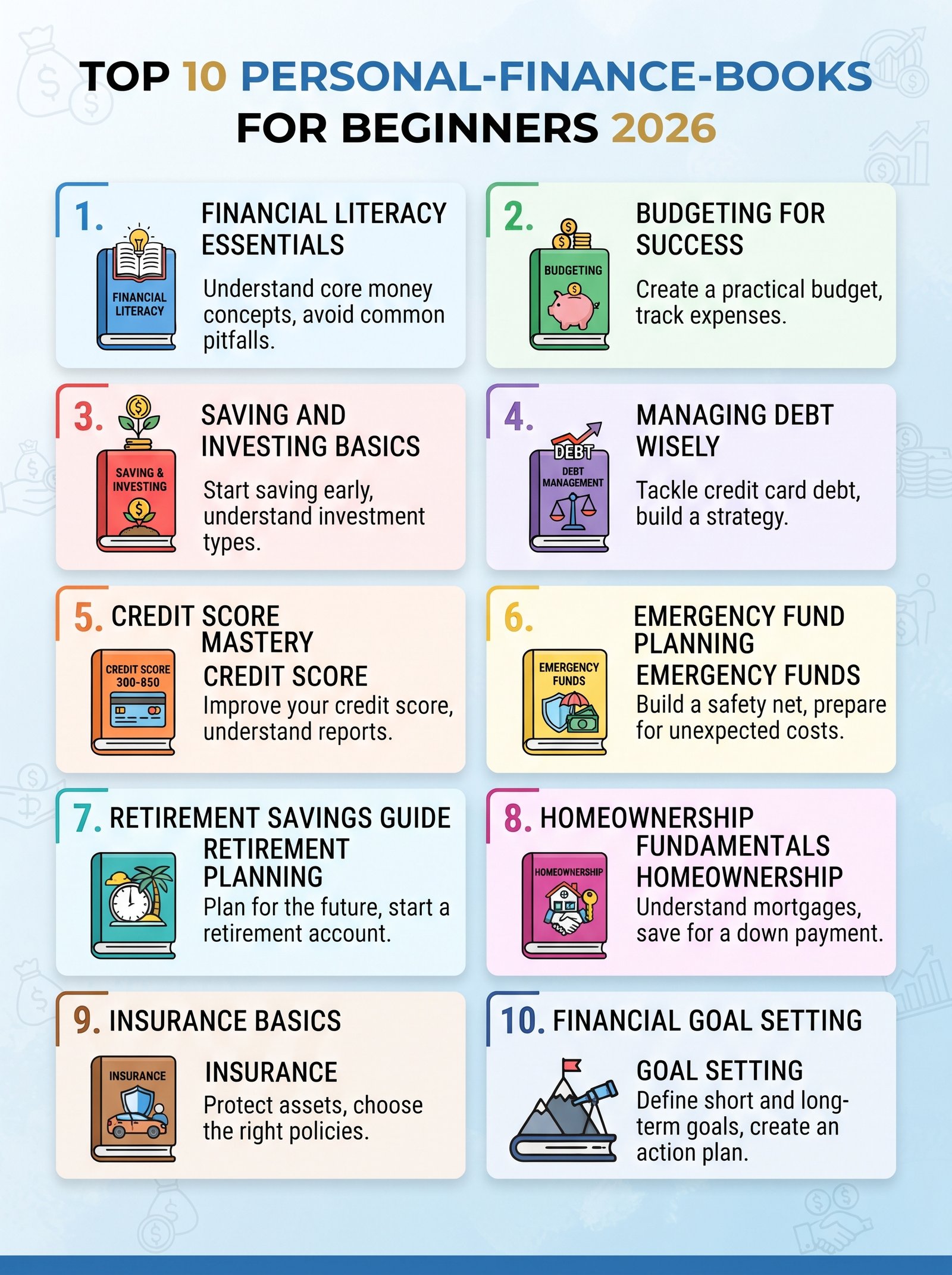
Personal finance books can be the key to understanding and managing your money more effectively, but with so many options available, it's hard to know where to start. This article addresses that by highlighting the top personal finance books for beginners in 2026, covering essential topics from why reading these books is important to tips for managing your own personal finance journey. Whether you're looking to understand budgeting, investing, or simply want to take control of your financial future, this list provides a comprehensive guide to getting started with personal finance.
Why Reading Personal Finance Books is Important
Learn Practical Money Management Skills
Reading personal finance books is essential for anyone looking to gain a solid foundation in money management. These books offer practical advice on how to manage your income, reduce expenses, and prioritize savings. For example, "The Total Money Makeover" by Dave Ramsey provides step-by-step instructions on creating a budget and getting out of debt.
Understand Financial Planning and Budgeting
Understanding financial planning and budgeting is crucial for long-term financial success. Personal finance books like "The Simple Path to Wealth" by JL Collins teach you how to create a realistic budget and stick to it. They also guide you through the process of setting financial goals and planning for retirement.
Gain Knowledge on Saving and Investing
Saving and investing are key components of building wealth. Books such as "The Intelligent Investor" by Benjamin Graham and "A Random Walk Down Wall Street" by Burton G. Malkiel offer valuable insights into the principles of investment and how to navigate the stock market. They help readers understand the importance of diversification and long-term strategies.
Key Points
- Budgeting: Learn to track and control your spending.
- Investing: Discover the basics of investing and wealth building.
- Debt Management: Get tips on reducing and eliminating debt.
By reading these books, you can take the first steps towards a secure financial future.
Top Personal Finance Books for Beginners
Rich Dad, Poor Dad by Robert Kiyosaki
"Rich Dad, Poor Dad" is a seminal personal finance book that challenges conventional financial wisdom. Kiyosaki introduces the concept of distinguishing between "wage slaves" (poor dad) and "business owners" (rich dad). Key themes include understanding the difference between assets and liabilities, investing in education, and the importance of understanding real estate. This book is a must-read for anyone looking to break free from traditional financial constraints.
The Total Money Makeover by Dave Ramsey
Dave Ramsey's "The Total Money Makeover" is a comprehensive guide to personal finance that focuses on a step-by-step approach to achieving financial independence. The book covers topics such as debt elimination, building an emergency fund, and investing for the future. Ramsey’s philosophy revolves around the "baby steps," which include getting out of debt, saving for a car, and setting up a debt snowball. His straightforward, no-nonsense advice and success stories make this a highly effective resource for beginners.
Your Money or Your Life by Vicki Robin and Joe Dominguez
"Your Money or Your Life" by Vicki Robin and Joe Dominguez offers a unique perspective on personal finance, focusing on the concept of living a meaningful life free from financial stress. The book encourages readers to track their spending, understand the psychology of money, and make conscious choices about what they value. It provides practical tools for reducing expenses, increasing income, and redefining success. This book is particularly useful for those who want to rethink their relationship with money and align their financial goals with their life goals.
Conclusion
By reading these books, you can take the first steps towards a secure financial future. Each offers valuable insights and actionable steps to improve your financial literacy and achieve financial independence.
How to Manage Personal Finance Books
Managing your personal finance books effectively can enhance your learning experience and ensure you don't miss any crucial information. Here are some tips to help you stay organized:
- Create a Digital Library for Easy Access: Use a digital platform like a tablet or e-reader to store your personal finance books. This allows you to carry your entire library with you wherever you go. Consider organizing them by topic or reading order to make finding specific books easy.
Steps to Organize Your Books
- Install a Book-Reading App: Download apps like Adobe Digital Editions, Google Play Books, or Amazon Kindle to create your digital library.
- Set Up a Catalog System: Use a spreadsheet or a dedicated app like Goodreads to keep track of which books you own, when you read them, and your overall impressions.
- Sync Across Devices: Ensure your digital books are synced across all your devices so you can access them wherever you need them.
Utilize Bookmarks and Notes
- Use Bookmarks or Notes for Important Sections: Highlight or bookmark key passages that resonate with you or provide valuable advice. This helps you quickly revisit important information when needed.
- Take Notes: Jot down key points in a notebook or use the notes feature in your e-reader. This can be particularly useful for summarizing key takeaways or for future reference.
Discuss with Friends or Join Book Clubs
- Engage with Others: Join online forums or social media groups dedicated to personal finance. Discussing your insights with others can provide new perspectives and reinforce your learning.
- Participate in Book Clubs: Look for local or online book clubs focused on personal finance. These can be a great way to meet like-minded individuals and deepen your understanding of financial concepts.
By implementing these strategies, you can make the most of your personal finance books and accelerate your journey to financial literacy.
Tips for Writing a Personal Finance Book
Research Thoroughly and Stay Updated
To write an effective personal finance book, it's crucial to conduct thorough research and stay informed about the latest financial trends. Utilize a variety of sources, including academic journals, government reports, and reputable financial news outlets. Engaging with experts in the field can also provide valuable insights and credibility to your work.
Simplify Complex Financial Concepts
One of the biggest challenges in writing about personal finance is making complex concepts accessible to beginners. Break down financial jargon and use analogies that relate to everyday life. For instance, explain compound interest by comparing it to the snowball effect of rolling a snowball down a hill. This approach helps readers understand and retain the information.
Engage Readers with Real-Life Examples
Real-life examples can make your book more relatable and engaging. Include case studies of people who have successfully managed their finances, overcoming common pitfalls such as debt or saving for retirement. Highlight the financial decisions and strategies these individuals employed, and how they impacted their lives. This not only educates but also inspires your readers to take action.
What Are Good Personal Finance Books
When choosing personal finance books, it's important to select those written by financial experts who have credible experience and a proven track record. These authors often provide well-researched, practical advice that can be highly beneficial for beginners.
- Consider books by financial experts: Look for authors like Suze Orman, Dave Ramsey, and Robert Kiyosaki, who are widely respected in the field of personal finance. Their books often cover a wide range of topics, from basic budgeting to advanced investment strategies.
- Look for positive reviews and recommendations: Check online platforms such as Amazon, Goodreads, or financial forums where readers share their experiences and insights. Positive reviews can help you gauge the quality and usefulness of the book.
- Choose books that align with your financial goals: Depending on your specific needs, you might focus on books that tackle particular financial issues. For example, if you're looking to pay off debt, consider books like "The Total Money Makeover" by Dave Ramsey or "The Simple Path to Wealth" by JL Collins. If saving for retirement is your priority, "Your Money or Your Life" by Vicki Robin and Joe Dominguez offers valuable insights.
Examples of Good Personal Finance Books
- "The Total Money Makeover" by Dave Ramsey: This book is ideal for those looking to get out of debt and build wealth. Ramsey’s step-by-step approach is easy to follow and has helped many readers achieve financial freedom.
- "Rich Dad Poor Dad" by Robert Kiyosaki: This book challenges traditional financial wisdom and emphasizes the importance of understanding money and investing. It’s a great starting point for anyone interested in financial independence.
- "The Simple Path to Wealth" by JL Collins: Focused on the power of investing in low-cost index funds, this book provides a clear, no-nonsense strategy for building a passive income stream.
By selecting books that are well-researched, positively reviewed, and tailored to your financial goals, you can gain the knowledge
Frequently asked questions
How to manage personal finance books?
Organize personal finance books by topic or reading order for easy access. Use a digital tool or a physical bookshelf for better organization.
How to write a personal finance book?
Research thoroughly, outline your content, and write clearly. Include practical examples and advice to engage readers. Edit and revise for accuracy and readability.
What are good personal finance books?
Good personal finance books cover basics like budgeting, saving, and investing. Popular choices include 'Rich Dad, Poor Dad' by Robert Kiyosaki and 'The Total Money Makeover' by Dave Ramsey.
What is the #1 personal finance book of all time?
While opinions vary, 'The Intelligent Investor' by Benjamin Graham is often cited as one of the best personal finance books, known for its wisdom on value investing.
Final thoughts
This list of top personal-finance books for beginners in 2026 covers essential topics from budgeting and saving to investing and debt management. The key takeaway is that understanding basic financial principles can significantly improve your financial health. Your next step could be to pick up one of these books and start applying the knowledge to your own financial situation. What book from this list are you most excited to read, and why?
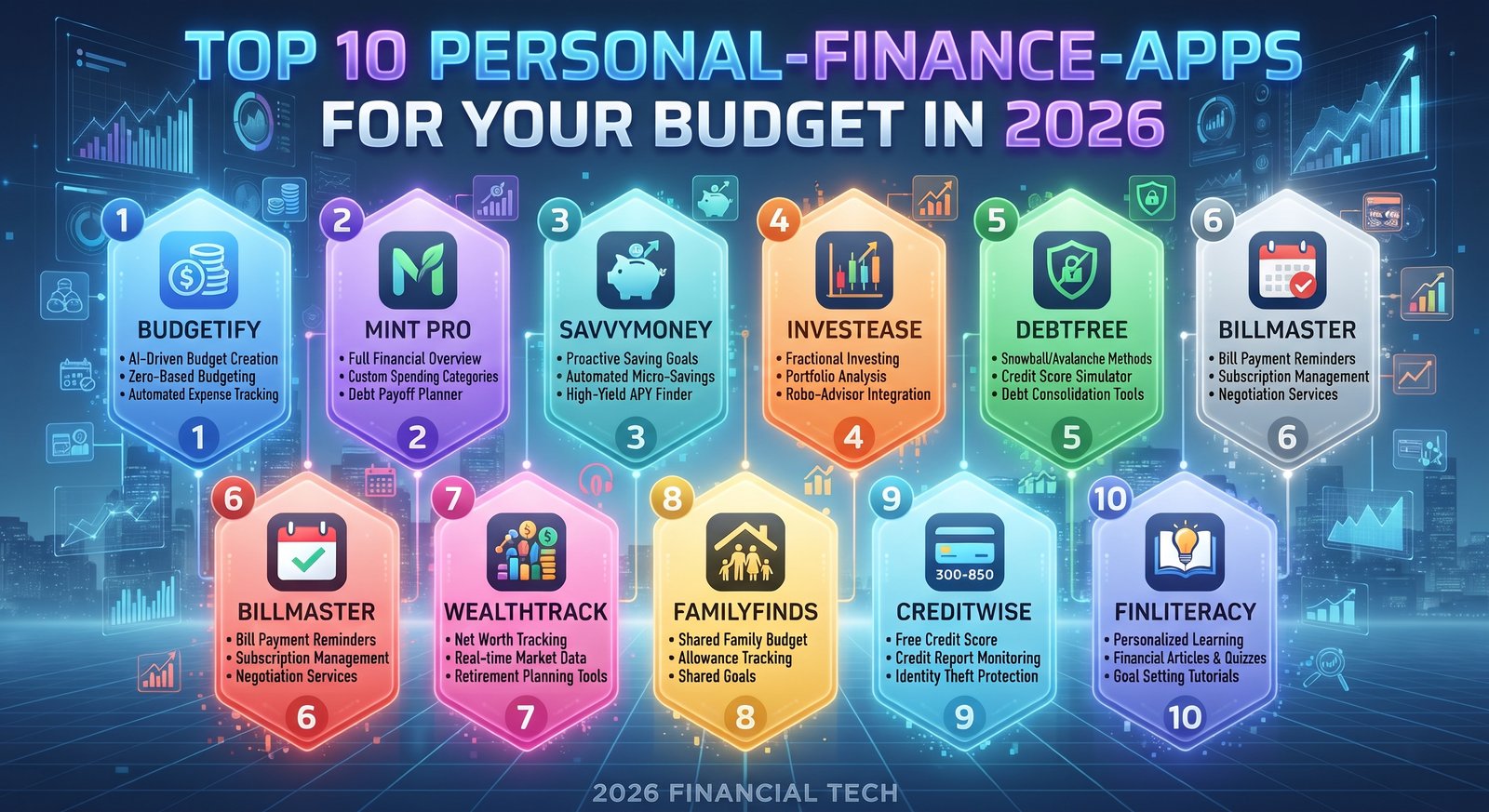
Related posts : Top 10 Personal-Finance-Apps for Your Budget in 2026
Free tools to put this into practice