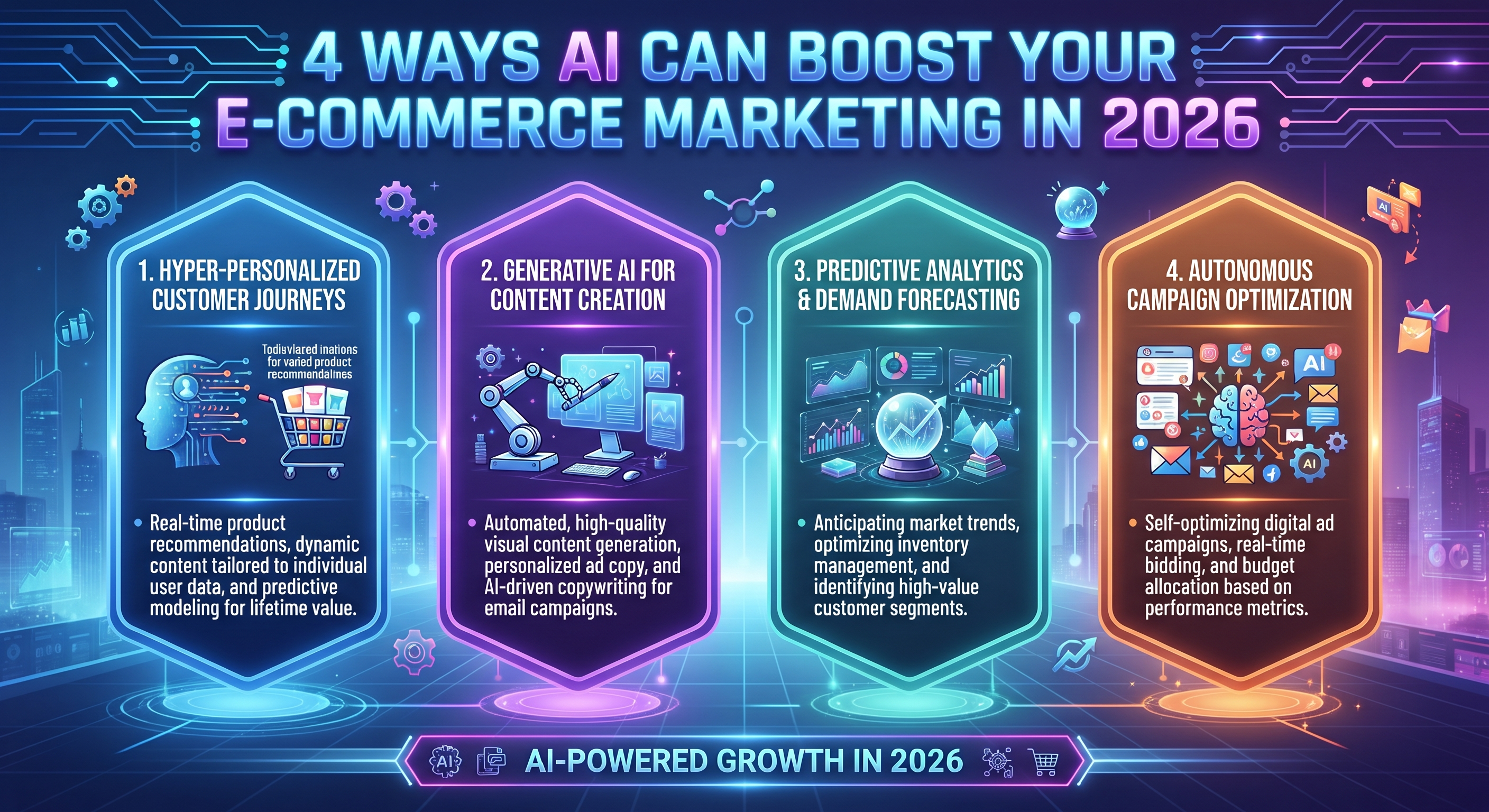
AI for e-commerce marketing can streamline your operations and enhance your online presence, but many wonder how it can be effectively integrated. This article addresses that by exploring four key ways AI can boost your e-commerce marketing efforts in 2026.
Understanding AI in E-commerce delves into the basics, making it clear how artificial intelligence can analyze customer data to improve product recommendations. Enhancing Customer Experience through personalized interactions and automated responses is one of the ways AI can make your customers feel valued. Optimizing Advertising and Sales by leveraging AI for targeted ads and dynamic pricing ensures you reach the right audience at the right time. Improving Email Marketing with AI-driven segmentation and content personalization can significantly increase open and click-through rates. Implementing these AI technologies can transform your e-commerce strategy, making it more efficient and effective.
Understanding AI in E-Commerce
AI in e-commerce involves using artificial intelligence to analyze data and automate processes, enhancing the overall shopping experience for customers. This technology helps in customer segmentation and personalization, which are crucial for understanding and engaging with your target audience more effectively.
AI for Customer Segmentation
AI tools can process and analyze vast amounts of customer data, including browsing history, purchase behavior, and demographic information. This analysis enables businesses to create detailed customer profiles and segment them into specific groups. For example, AI can identify customers who are likely to buy a particular product based on their past purchases and browsing patterns.
AI Tools for Predictive Analysis
AI can analyze large datasets to predict trends and customer behavior. By leveraging machine learning algorithms, e-commerce platforms can forecast which products will be popular, when customers are most likely to make a purchase, and how to optimize stock levels. This predictive capability helps in making informed decisions and improving inventory management.
- Step 1: Collect customer data from various sources, such as purchase history, website visits, and social media interactions.
- Step 2: Use AI tools to analyze this data, identifying patterns and behaviors.
- Step 3: Implement these insights to tailor marketing strategies and product offerings, enhancing customer satisfaction and loyalty.
Through these steps, AI for e-commerce marketing can significantly enhance your business's ability to connect with customers on a personal level, driving higher engagement and conversion rates.
Enhancing Customer Experience
AI chatbots provide 24/7 customer support, resolving issues quickly and efficiently. These chatbots use natural language processing (NLP) to understand customer queries and provide immediate solutions, reducing the wait time and improving customer satisfaction. ### Steps to Implement AI Chatbots
- Choose the Right AI Chatbot Provider: Select a provider that offers customizable chatbot solutions and integrates well with your existing e-commerce platform.
- Train the Chatbot: Provide the chatbot with a comprehensive knowledge base, including product information, FAQs, and common customer issues.
- Monitor and Improve: Continuously monitor the chatbot’s performance and update its responses based on customer interactions and feedback.
Increasing Conversion Rates with AI-Driven Recommendations
AI-driven product recommendations increase conversion rates by suggesting relevant items to customers based on their browsing and purchase history. These recommendations can be displayed on product pages, emails, and during checkout, leading to higher add-to-cart rates and increased sales. ### Tips for Effective Product Recommendations
- Personalize Based on Browsing History: Use data to tailor recommendations to each user’s unique interests and past behaviors.
- Combine with Seasonal and Trending Products: Offer a mix of personalized and trending items to cater to a wider audience.
- Test and Optimize: Continuously test different recommendation algorithms and strategies to find the best approach for your e-commerce store.
Optimizing Advertising and Sales
Automating Ad Placements and Bidding Strategies
AI for e-commerce marketing can significantly enhance your advertising efforts by automating ad placements and bidding strategies. This automation ensures that your ads are shown to the right audience at the right time, potentially increasing your return on investment (ROI). For instance, AI systems can analyze user behavior, search trends, and market conditions to determine the optimal placement and timing of ads.
Optimizing Pricing and Inventory Management
AI tools also help in optimizing pricing and inventory management. By analyzing historical sales data and current market trends, AI can predict demand and adjust prices dynamically to maximize profits. This real-time adjustment can prevent overstocking or stockouts, ensuring that you always have the right products available when customers want to buy them.
Steps to Implement AI in Pricing and Inventory
- Gather Data: Collect historical sales data, competitor prices, and customer behavior.
- Analyze Patterns: Use AI algorithms to identify trends and patterns in the data.
- Predict Demand: Use the insights to predict future demand and adjust prices and inventory levels accordingly.
- Monitor and Adjust: Continuously monitor the performance and make adjustments as needed.
Example
Consider an e-commerce store selling seasonal products. AI can predict the demand for winter clothing based on past sales, weather forecasts, and current market trends. The system can then automatically adjust the pricing and stock levels, ensuring that the store is well-prepared for the upcoming season and avoiding the risk of unsold inventory.
Improving Email Marketing
Personalizing Email Content
AI for e-commerce marketing can significantly enhance email marketing by personalizing content to match individual customer preferences. By analyzing past purchase history, browsing behavior, and other customer data, AI can craft tailored messages that resonate with each recipient. For example, if a customer frequently buys outdoor gear, the AI can suggest new camping equipment or clothing items in the next email, increasing the likelihood of a conversion.
Segmenting Email Lists
AI can also segment email lists for targeted campaigns, which can boost engagement and drive sales. By identifying different customer segments—such as new subscribers, loyal customers, or those who haven’t purchased in a while—the AI can tailor the content and offers to each group. Here are the steps to implement effective email list segmentation:
- Collect Data: Gather customer data through purchase history, website interactions, and surveys.
- Define Segments: Use AI to categorize customers based on specific criteria, such as purchase frequency or product interest.
- Create Targeted Emails: Develop personalized content and offers for each segment.
- Test and Optimize: Continuously test different email strategies to see which perform best and refine the segmentation and content accordingly.
By leveraging these techniques, e-commerce businesses can improve the relevance and effectiveness of their email marketing campaigns, leading to higher open rates and conversion rates.
Implementing AI Technologies
Implementing AI Technologies
Choosing the Right Tools
Selecting the appropriate AI tools is crucial for successful integration. Opt for tools that seamlessly connect with your existing e-commerce platform. Ensure the tools are compatible with your current systems to avoid disruptions and ensure a smooth transition. Consider factors such as data compatibility, ease of use, and customer support when making your selection.
Training Your Team
Training your team is essential for the successful implementation of AI technologies. Here’s how you can proceed:
- Identify Key Personnel: Select team members who will be directly involved with the AI tools and processes.
- Provide Training Sessions: Organize training sessions that cover the basics of AI, how to use the tools, and best practices. Consider inviting experts from the AI tool providers to conduct these sessions.
- Offer Ongoing Support: Provide ongoing support and resources to ensure that your team remains up-to-date with the latest features and functionalities.
- Encourage Experimentation: Allow team members to experiment with different AI features to find the most effective solutions for your e-commerce business.
By choosing the right AI tools and ensuring your team is well-trained, you can maximize the benefits of AI in your e-commerce marketing strategies.
Frequently asked questions
How can AI be used in e-commerce marketing?
AI can personalize product recommendations, optimize pricing, and automate customer service through chatbots, enhancing the shopping experience.
What are the benefits of using AI in e-commerce advertising?
AI helps in targeting the right customers, improves ad relevance, and automates ad optimization, leading to better engagement and conversion rates.
How can AI help with e-commerce email marketing?
AI analyzes customer behavior to send timely, relevant emails, increasing open rates and driving higher click-through rates and sales.
What are some AI tools for e-commerce marketing?
Popular AI tools include Phrasee for email subject lines, Bluecore for personalized recommendations, and Dialogflow for chatbot interactions.
Final thoughts
AI offers significant opportunities for enhancing e-commerce marketing in 2026 by personalizing customer experiences, optimizing product recommendations, improving chatbot interactions, and analyzing customer data for better decision-making. Start by integrating a chatbot to provide immediate customer support and gather valuable feedback. How has AI impacted your e-commerce marketing strategies? Share your experiences below.
Free tools to put this into practice