When choosing the best personal finance software for Mac, the primary question is: which tool will best help you manage your finances efficiently and effectively? In 2026, the landscape of personal finance software on Mac continues to evolve, offering a range of features from budgeting and investment tracking to tax preparation and expense categorization. This article introduces you to the top picks for 2026, delving into essential features to consider and providing tips for selecting the best software that aligns with your financial management needs.
Introduction to Personal Finance Software
Personal finance software helps you track expenses, budget, and manage investments more effectively. It provides a comprehensive view of your financial health, enabling you to make informed decisions and plan for the future. For Mac users, there are several options tailored to their operating system, offering a seamless experience and powerful features.
Key Benefits of Using Personal Finance Software
- Expense Tracking: Automatically categorize and track your expenses, from groceries to travel.
- Budgeting: Set and monitor your spending limits to stay within your financial goals.
- Investment Management: Track your investments, including stocks, bonds, and mutual funds.
- Reporting and Analysis: Generate detailed reports and visualizations to understand your financial situation.
Essential Features to Look For
- Seamless Integration: Look for software that integrates with your bank accounts and credit cards.
- User Interface: A clean, intuitive interface is crucial for easy navigation and use.
- Security: Ensure the software has robust security measures to protect your financial data.
- Customization: The ability to customize your reports and categorize transactions according to your needs.
- Customer Support: Reliable support is essential for any software, especially when dealing with financial data.
Steps to Choose the Best Software
- Define Your Needs: Determine what features are most important to you, such as budgeting tools or investment tracking.
- Read Reviews: Look for user reviews and ratings to gauge the software's performance and reliability.
- Test the Free Trial: Many software providers offer free trials, which can help you evaluate the product without commitment.
- Check Compatibility: Ensure the software is compatible with your Mac and any other devices you use.
- Compare Pricing: Compare the pricing plans to find the best value for your needs.
Example Features Comparison
| Feature | QuickBooks Desktop for Mac | Mint for Mac | Personal Capital for Mac |
|---|---|---|---|
| Expense Tracking | Yes | Yes | Yes |
| Budgeting | Yes | Yes | Yes |
| Investment Management | Yes | No | Yes |
| Customer Support | Phone, Live Chat | Phone, Live Chat | |
| Price | $159.99/year | Free | $19.95/month |
By carefully considering these features and steps, you can find the best personal finance software for Mac that meets your specific financial management needs.
Top Picks for 2026

When choosing the best personal finance software for Mac, you'll want to consider both free options and those with advanced features. Here are three top contenders:
- Mint: Free and user-friendly, Mint integrates seamlessly with many financial institutions, making it easy to track your expenses and savings. It offers real-time updates and alerts, helping you stay on top of your finances without any manual entry.
- Quicken: Known for its comprehensive features, Quicken is ideal for those who need detailed financial management. It supports budgeting, investment tracking, and tax management, among other features. The software is slightly pricier than Mint, but the added functionality could be worth it.
- EveryDollar: Based on the principles of Dave Ramsey, EveryDollar is perfect for budgeting enthusiasts. It offers a structured approach to financial planning and goal setting, making it a great choice for those who follow the "Baby Steps" program. While it requires more manual input, the structured approach can be highly beneficial.
Features to Look For
When selecting the best personal finance software for Mac, consider these key features:
- Integration with Financial Institutions: Look for software that can easily connect to your bank accounts, credit cards, and investment accounts. Mint and Quicken both offer this feature, making it convenient to track your finances in one place.
- Budgeting Tools: Effective budgeting tools are essential. EveryDollar provides a detailed budgeting framework, while Mint and Quicken offer customizable budgeting options.
- Expense Tracking: Ensure the software allows you to categorize and track expenses easily. Mint and Quicken both excel in this area, providing robust tools for expense management.
- Alerts and Notifications: Real-time alerts for low balances, pending transactions, and upcoming bills can help you stay on top of your finances. Mint and Quicken both offer customizable alerts.
Tips for Choosing the Best Software
- Assess Your Needs: Determine what features are most important to you. Do you need advanced budgeting tools, or are you more focused on simple tracking?
- Try Before Buying: Many free trials are available. Use them to see which software best suits your needs.
- Check Compatibility: Ensure the software is compatible with your Mac and other devices you use.
- Read Reviews: Look for user reviews to see if others have had positive experiences with the software.
By carefully considering these features and steps, you can find the best personal finance software for Mac that meets your specific financial management needs.
Features to Look For

Budgeting Tools to Set and Track Spending Limits
Budgeting is a critical aspect of personal finance management. The best personal finance software for Mac should offer robust budgeting tools that allow you to set spending limits and monitor your progress. Look for features like customizable budget categories, where you can track income, expenses, and savings. Additionally, these tools should provide real-time alerts when you approach or exceed your budget limits, helping you stay on track with your financial goals.
Investment Tracking to Monitor and Manage Your Investments
Investment tracking is another essential feature for managing your financial health. The software should enable you to input and track various investment types, such as stocks, bonds, mutual funds, and real estate. Key features to consider include automatic import of investment data, detailed performance reports, and historical tracking. These tools help you make informed decisions and adjust your investment strategy as needed.
Automatic Categorization of Transactions for Easier Tracking
Manual categorization of transactions can be time-consuming and error-prone. The best personal finance software for Mac should offer automatic categorization of transactions, which saves time and reduces the risk of mistakes. When choosing a software, look for options that use machine learning to categorize transactions accurately. This feature not only simplifies your task but also ensures that your financial records are organized and easy to review.
Steps to Choose the Right Features
- Identify Your Needs: Determine what features are most important to you. Do you prioritize budgeting, investment tracking, or both?
- Evaluate Compatibility: Ensure the software is compatible with your Mac and can integrate with other financial tools you use.
- Check Reviews and Ratings: Read reviews from other users to see how the software performs in real-world scenarios.
- Test the Demo: If possible, try a free trial or demo version to test the features and ensure they meet your requirements.
By carefully considering these features and steps, you can find the best personal finance software for Mac that meets your specific financial management needs.
Tips for Choosing the Best Software
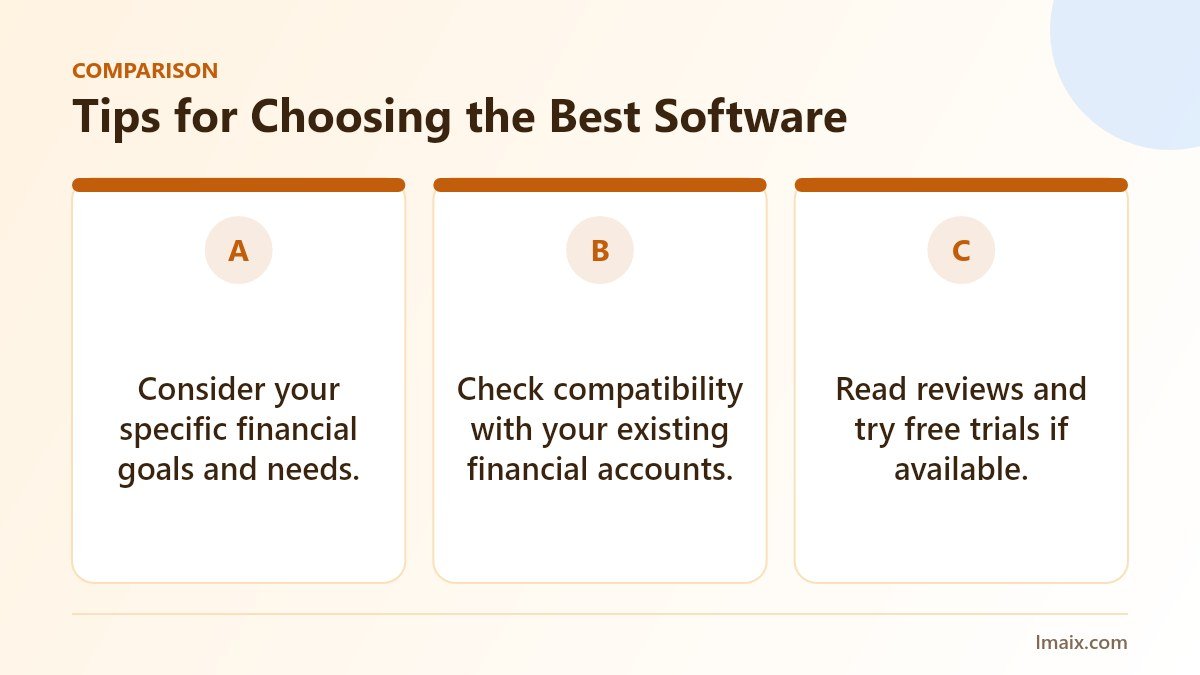
Consider Your Specific Financial Goals and Needs
Before choosing a personal finance software, clearly define your financial goals and needs. Are you primarily focused on budgeting, investing, or debt management? For example, if you're looking to track your expenses and create a budget, a software that offers robust budgeting tools will be more useful than one that excels in investment tracking. Similarly, if you want to monitor your retirement savings, a software that provides detailed investment reports and retirement planning features would be more suitable.
Check Compatibility with Your Existing Financial Accounts
Ensure that the software you choose is compatible with your existing financial accounts. This means checking if it can connect directly to your bank accounts, credit cards, and investment accounts. Direct integration can save a lot of time and effort in manually entering financial data. For instance, if you have multiple bank accounts and a retirement account, a software that supports all these connections will make managing your finances more efficient.
Read Reviews and Try Free Trials if Available
To make an informed decision, read reviews from other users. Websites like MacRumors, MacUpdate, and Trustpilot often have detailed reviews that can give you insights into the software's strengths and weaknesses. Additionally, if the software offers a free trial, take advantage of it. During the trial period, you can test the software’s features, get a feel for its user interface, and see if it meets your needs. Some software providers even offer extended trial periods, which can be particularly useful in making a final decision.
Steps to Take
- Define Your Goals: List out your financial objectives to ensure the software aligns with them.
- Check Compatibility: Verify that the software supports your financial accounts and services.
- Read Reviews: Look up reviews on trusted sites to gauge user satisfaction.
- Try Free Trials: Use the free trial to test the software's features and usability.
By carefully considering these features and steps, you can find the best personal finance software for Mac that meets your specific financial management needs.
Frequently asked questions
What is the best personal finance software for Mac?
As of 2026, Mint for Mac is highly regarded for its comprehensive features and user-friendly interface, making it a top choice for personal finance management.
What is the best personal finance app for Mac?
For a streamlined mobile experience, EveryDollar by YouVersion for Mac is praised for its simplicity and integration with desktop applications.
How can I manage my finances better with Mac software?
Use Mac-based financial software to track expenses, set budgets, and monitor investments. Regular updates and categorization can help you stay on top of your finances.
What features should I look for in personal finance software?
Look for features like budgeting tools, expense tracking, investment monitoring, and automatic categorization. User reviews and compatibility with your existing systems are also important.
Final thoughts
After evaluating the top personal finance software options for Mac in 2026, the key takeaway is that each tool excels in specific areas like budgeting, investment tracking, or categorization. For a comprehensive experience, consider a mix of tools that cater to your unique financial needs. What feature are you most excited to try in these new apps?
Related posts : 2026's Best Personal-Finance-App for Budgeting · 2026's cheapest personal loans: how to find the best rates · Top 10 Personal-Finance-Books for Beginners 2026
Free tools to put this into practice